Webflow Conf 2026 recap: what Source by Webflow means for your brand and website
Stay in the know
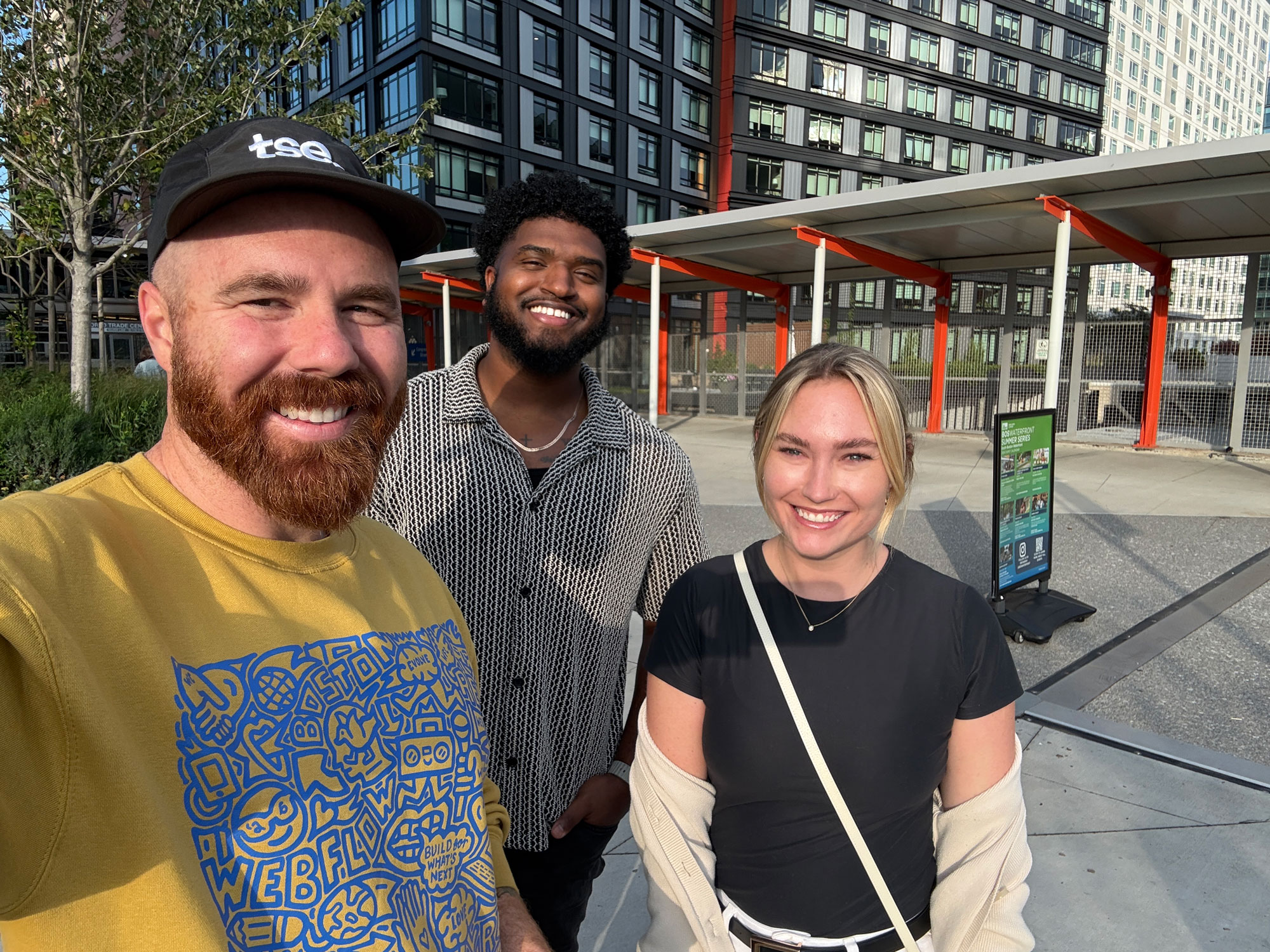
The ThreeSixtyEight team spent Webflow Conf 2026 in Boston. The biggest takeaway: the web is changing again, and Webflow's new platform, Source, shows where it's headed.
TSE has been through a shift like this before. Years ago, the agency made Webflow its primary platform because it gave designers real control over what they built. What the team saw in Boston feels like that moment again, only bigger.
Here's what Webflow announced, what it means for your website, and what to do about it now.
How is the web changing in 2026?
Short answer: The web is changing who builds it and who reads it, at the same time. AI agents now help build and improve websites, and AI answer engines like ChatGPT, Claude, Gemini, and Perplexity increasingly read your site first and describe your brand to buyers.
Every era of the web started with a question that sounded optional:
- 1990s: Do we really need a website?
- 2000s: Can people find us on Google?
- 2010s: Does it work on a phone?
Each one felt optional at first, until it wasn't. The brands that answered early built head starts that lasted years.
Webflow Conf put the next question on the table, and it has two parts.
Who builds your website? First it was developers. Then tools like Webflow handed designers the keys. In her opening keynote, Webflow CEO Linda Tong expanded the definition of a builder again. It now includes marketers and AI agents.
Who reads your website? Still people, but more and more, AI reads it first. In a G2 survey cited by Webflow, 51% of marketers said they would start their short lists with AI answer engines more often than Google.
AI increasingly decides whether you get found. Your website still decides whether you get chosen.
What is Source by Webflow?
Short answer: Source by Webflow is a new platform where a company's marketers, designers, developers, and AI agents build, run, and improve its website together. Webflow announced Source on September 2, 2026, at Webflow Conf, and it's available as a limited research preview.
The easiest way to think about it: the Webflow most people know is a tool for building a website. Source is a control room for running one after launch.
Why build it? AI made it easy to spin up a site from a prompt. The hard part comes after launch: knowing what to change, scaling what works, and keeping your brand consistent as more people and agents touch the site. Webflow argues that today's AI site builders start from zero every session, push everyone through a prompt box, and lack the guardrails a team needs.
How does Source by Webflow work?
Short answer: Source puts your website's code at the center. AI agents work directly in the code, people edit visually on top of it, and everyone works inside guardrails your team controls.
- Code is the foundation. Agents work directly in the code that ships, so they can take on bigger changes. People still get Webflow's visual canvas, and every visual edit writes to that same code. That's a reversal for Webflow, which has always kept code behind the scenes.
- Every role gets its own workspace. Webflow calls these Views. A marketer might see campaigns, content, and performance. A designer loads in the brand system. A developer sets the guardrails. Teams can also build custom Views for any workflow.
- Agents don't wait to be asked. They watch performance, flag problems, and draft fixes for review. Webflow's examples include an agent that catches pages losing conversions and suggests tests, one that checks new pages against your brand voice, and one that spots a customer story in a sales call and drafts a case study.
- Guardrails come built in. Agents follow the same brand rules, permissions, and approval steps as people, and Source logs every change. You decide what can go live on its own and what needs sign-off.
- It works with what you already have. Source connects to your existing code, content management system (CMS), hosting, and marketing tools, including sites already built in Webflow, with no rebuild required.
What did Webflow announce at Webflow Conf 2026?
Short answer: Along with Source, Webflow announced Campaigns, Assets, content agents in Webflow AEO, MCP 2.1, Releases, Agent Instructions generation, and Agent Presence. Most roll out between September and the end of 2026.
Here's each one in plain English, with availability as of Webflow's September 2 announcement:
- Source by Webflow: a shared platform where marketing teams and AI agents build and improve a website together. Limited research preview.
- Campaigns: turns a campaign brief into a landing page, audience-specific versions, and matching ads in hours, even if your main site doesn't run on Webflow. It connects to HubSpot or Salesforce so you can see which leads and deals it drives. In beta; on sale in October 2026.
- Assets: adapts your approved brand creative for every channel, from resized graphics to video cutdowns with captions. It runs on technology from Vidoso, a company Webflow acquired in 2026. Beta in October 2026.
- Content agents in Webflow AEO: Webflow AEO tracks how your brand shows up in AI answers. Its new agents find the topics where competitors get cited and you don't, then draft original content in your CMS for review. Included for Webflow Enterprise customers.
- MCP 2.1: gives AI tools like Claude and ChatGPT deeper access to Webflow, from building animations to searching your CMS and fixing deployment errors. MCP (Model Context Protocol) is the open standard that lets AI tools connect to other software. All customers, September 2026.
- Releases: lets teams prepare big updates, including pages, CMS content, and translations, in a separate copy of the site, then launch everything at once. Beta later in 2026.
- Agent Instructions generation: writes the brand and design rules your AI agents follow, using what's already on your site. Rolling out from September 2026.
- Agent Presence: shows AI agents working live on your site's canvas, the same way you'd see a teammate. All customers, September 2026.
A separate Builder keynote covered more updates for the designers, developers, and content editors who work in Webflow every day.
How often do brands show up in AI answers?
Short answer: Not often. Webflow analyzed more than 2,000 US company websites and found the median company appears in just 16% of the AI answers it would want to be part of, and earns a citation link only 6% of the time.
It gets worse. When AI did mention a company, it got the facts wrong about a third of the time and rarely explained what made the company different. Industrial and manufacturing companies were mentioned less often than software companies, 14% to 20%.
Now the good news. In the same research, companies at level 3 on Webflow's answer engine optimization (AEO) maturity scale earned 2.3 times more mentions and 3.7 times more citations than companies at level 1. And smaller brands can close the gap on bigger ones with better content and a stronger technical setup. Most of the fixes are fundamentals: broken links, missing metadata, stale pages, and content that doesn't answer real buyer questions.
See how AI describes your company right now. ThreeSixtyEight's free AEO Playbook shows you in about 30 seconds, plus one thing you can fix today.
What does Source mean for marketing teams?
Short answer: Marketing teams can do more of the work themselves, faster, with AI handling the busywork and people deciding what ships. Launch day stops being the finish line.
Launch day becomes the starting line. For most of the web's history, a launch felt like the finish line. ThreeSixtyEight has always treated it as the starting line, and that's how the agency approaches web projects. Source is built on the same idea: the real work happens every week after a site goes live.
Lean teams can punch above their weight. Most marketing leaders ThreeSixtyEight works with run teams of two to eight people. Agents that watch performance and draft the next fix give a small team the reach of a much bigger one.
Fewer tickets, less waiting. Changing a headline or launching a landing page shouldn't eat a developer's week. With guardrails set up front, marketers can make those changes directly.
Your brand rules become infrastructure. AI can only follow the rules it can read. Teams with a clear voice, message, design system, and approved assets will get better work from AI, and get it faster.
What does Source mean for agencies?
Short answer: Agencies can set up a client's workspaces, agents, and guardrails, then hand them to the client's team. They can also work on a client's existing site without forcing a platform switch.
That changes the relationship. Less time pushing tickets. More time on strategy, brand, and results. It's the kind of partnership ThreeSixtyEight has built toward for years, and it's why TSE is watching Source closely.
Is Source by Webflow ready to use?
Short answer: Not for most teams yet. Source is in a limited research preview, Webflow is enrolling select agencies and customers in phases over the coming months, and pricing hasn't been announced. The direction is clear, though, and the prep work can start now.
Every demo looks perfect on a keynote stage. Real websites are messier. Developers want to know how Source fits their existing workflows, and marketers want clear rules about who reviews what before agents touch a live site. Those are fair questions, and early users will answer them.
The wider market is early too. CMSWire reports that Gartner's 2026 Hype Cycle puts AI-agent marketing at the peak of the hype, and that only 17% of organizations have deployed AI agents so far, though more than 60% expect to within two years.
If you're on Webflow today, nothing breaks. Webflow says its current platform isn't going anywhere, it will keep investing in it, and it will offer a supported path to Source when you're ready.
What should brands do now to get ready?
Short answer: Fix the fundamentals AI rewards, and decide how your team will work with agents before they arrive. Here's where to start.
- Find out how AI describes you today. Ask ChatGPT, Claude, Gemini, and Perplexity the questions your buyers ask, or run ThreeSixtyEight's free AEO Playbook.
- Fix the basics. Broken links, missing metadata, and stale pages hold most sites back. They're boring. They matter.
- Answer real questions in plain language. AI favors content that answers what buyers actually ask. Fluffy copy gets skipped.
- Get your brand rules out of people's heads. Write down your voice, messaging, design system, and approved assets so teammates and agents can follow them. ThreeSixtyEight's Foundations diagnostic helps teams get their story straight.
- Decide who approves what. Map which changes can go live on their own and which need sign-off, before agents join the team.
- Start small, now. Pick one workflow, like landing page tests or content refreshes, and put AI to work on it this quarter.
The web's next chapter starts now
The TSE team left Boston optimistic. Lean marketing teams are about to do work that used to take a small army, and the brands willing to learn now will set the pace for their industries.
But the brands that won mobile didn't wait for it to be perfect. They jumped in, got a little messy, and learned faster than everyone else. This shift works the same way.
The next chapter of the web is starting. ThreeSixtyEight would rather help write it than read about it later.
Talk to ThreeSixtyEight about your website
Frequently asked questions
What is Source by Webflow?
Source by Webflow is a new platform where marketing teams and AI agents build, run, and improve a website together. Agents work directly in the site's code, people edit visually, and built-in guardrails control what goes live. Webflow announced it on September 2, 2026, at Webflow Conf.
When and where was Webflow Conf 2026?
Webflow Conf 2026 took place September 1–3, 2026, in Boston and online. Webflow said all sessions would be available on demand after the event.
How do I get access to Source by Webflow?
Source is in a limited research preview. You can apply at webflow.com/source. Webflow is enrolling select agency partners and customers in phases over the coming months.
How much does Source by Webflow cost?
Webflow hasn't announced public pricing for Source as of September 2026. Pricing for Campaigns and Assets hasn't been published yet either.
What happens to my existing Webflow site?
Nothing changes today. Webflow says its current platform isn't going anywhere, it will keep investing in it, and it will offer a supported migration path to Source when you're ready.
Does Source work with websites that aren't built on Webflow?
Yes, according to Webflow. Source connects to your existing codebase, CMS, hosting, and marketing tools without a rebuild. One agency partner plans to use it on client sites built with Next.js and Astro, two popular web frameworks.
Will AI agents change my website without approval?
Only if you allow it. Teams can require human approval before anything ships, or give agents more freedom for low-risk work. Source logs every change, whether a person or an agent made it.
What is AEO?
Answer engine optimization (AEO) is the work of making sure your brand shows up, accurately, in AI-generated answers from tools like ChatGPT, Claude, Gemini, and Perplexity. SEO helps you rank in search results. AEO helps you get mentioned and cited in AI answers.
About ThreeSixtyEight
ThreeSixtyEight is a web agency in Baton Rouge, Louisiana, a Webflow Enterprise Partner, and a certified B Corp. Members of the TSE team, including CEO Jeremy Beyt, attended Webflow Conf 2026 in Boston.
Sources
- Webflow, Introducing Source by Webflow, September 2026
- Webflow, The biggest announcements from Webflow Conf 2026, September 2, 2026
- Webflow, The AI discovery gap: we analyzed 2,000 websites, July 16, 2026
- CMSWire, Webflow Launches Source Agentic Workspace for Marketers, September 2, 2026